Synthetic diatom, computed: oil objective NA 1.25, condenser 0.75, 550 nm
When you look at something, what are you actually seeing?
Everything you have ever seen arrived as light. But the light that reached your eye had already been bent, filtered, sorted and counted on the way. And most of the light around you right now, the warm glow of the walls and of your own skin, is light you cannot see at all.
This exhibition follows light the whole way. The first room takes it from a lamp, through a microscope, into your eye, and asks of the diatom above: how much of what you are looking at is the diatom? The second room follows light past the edges of sight, from radio waves longer than a bus to gamma rays smaller than an atom, and asks how anyone found out it was there.
In every chapter you predict what the light will do, then find out. By the end you should be able to explain what light is to anyone who asks, and know which parts nobody can explain yet.
The chapters
The first room · From the lamp to the eye
- 1The PinholeDoes a smaller hole always make a sharper image?open
- 2What the Objective CaughtDoes magnifying reveal detail?open
- 3In StepWhen can light interfere with itself at all?open
- 4The Black CrossWhy does a starch grain show a dark cross between crossed polarisers?open
- 5One at a TimeDim the lamp until light arrives in single detections. What does a filter do to each one?open
- 6The Last InstrumentWhere does the optical calculation end and the eye begin?open
The second room · Beyond the visible
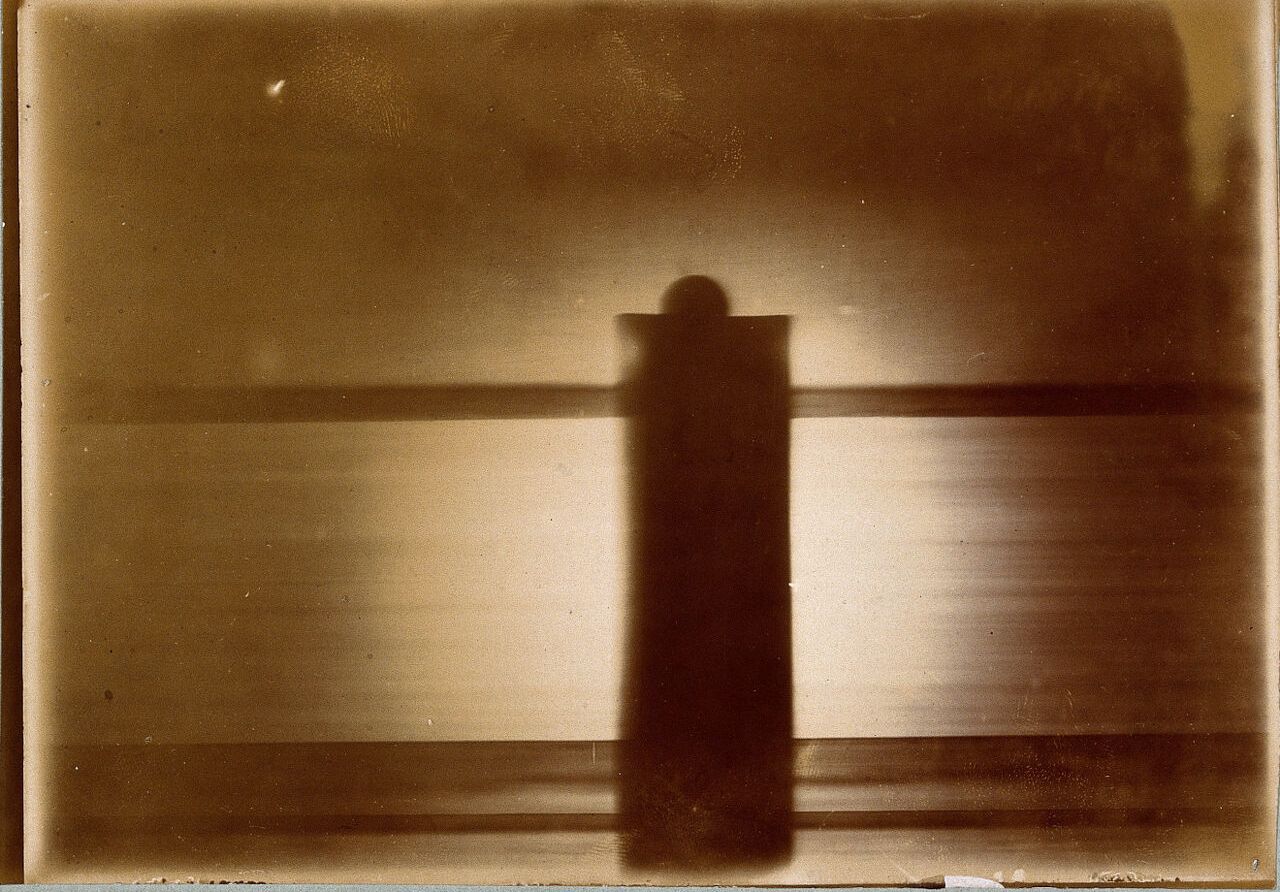
Most light cannot be seen. In 1800 a thermometer found it past the red. In 1801 a strip of darkening paper found it past the violet. In 1895 a photographic plate in a shut room found light that passes through doors. This room follows light where the eye cannot, from radio waves longer than a bus to gamma rays smaller than an atom.
- 7The Thermometer Beyond RedWhere in a rainbow is the warmest place?open
- 8The WindowWhy is water clear, and why do our eyes see this band of light?open
- 9Windows in the SkyWhat do three millimetres of ozone do to sunlight, and where is the sky open?open
- 10The Size of a DishWhere did Jansky’s hiss come from, and why must a radio telescope be so big?open
- 11A New Kind of RayWhy does bone stop the X-rays that flesh lets through?open
- 12The Hardest LightWhat happens when a gamma ray meets an electron?open
How it works
Each chapter explains one step of the light’s path well enough that you can predict what it will do. You commit to a prediction before you see the answer, then use what you learned on a case you have not seen. Your predictions and what you learned are kept in a notebook at the bottom of this page.
The map below follows the light from lamp to eye. The chapters do not run in that order: each idea comes when it is first needed. A step fills in once you have finished the chapters that explain it.
For the determined reader: how this was made, with the physics, data, tests and sources behind every chapter.
Your notebook
Empty so far. Each chapter adds one line here: something you can now predict, in words you could say aloud. Your committed predictions are kept too.